





dadasd
12
2025.08
Selecting Optimal Thickness and Shade for CAD/CAM Zirconia Discs
The integration of CAD/CAM dentistry into routine clinical practice has fundamentally refined restorative protocols, with zirconia CAD/CAM discs emerging as a material of choice for their exceptional synergy of mechanical strength and esthetic potential. However, the successful realization of this potential is contingent upon a pivotal, yet frequently underemphasized, clinical decision: the precise selection of material thickness and shade.
Choosing the correct material thickness is paramount to ensure adequate flexural strength and biomechanical longevity, while the accurate shade selection is critical for achieving seamless esthetic integration with the natural dentition. Whether utilizing robust monolithic zirconia or esthetically nuanced multilayer zirconia, achieving the optimal equilibrium between durability and beauty is essential for predictable, long-term clinical success.
Besmile, a trusted provider of comprehensive CAD/CAM dental solutions—including high-performance materials, precision equipment, implant prosthetics, and advanced staining systems—is dedicated to supporting clinicians and technicians in navigating these critical choices to deliver restorations of unparalleled quality.
Material Fundamentals: Monolithic vs. Multilayer Zirconia
A clear understanding of core material properties forms the foundation for informed selection.
Monolithic Zirconia: Fabricated from high-strength 3Y-TZP (3 mol% yttria-stabilized tetragonal zirconia polycrystal), this single-composition material offers exceptional density and fracture resistance. Its inherent opacity provides unmatched durability, making it the ideal substrate for posterior crowns, multi-unit bridges, and implant-supported restorations subjected to high masticatory loads. While less translucent, modern monolithic zirconia can achieve remarkable esthetics through sophisticated external characterization techniques.
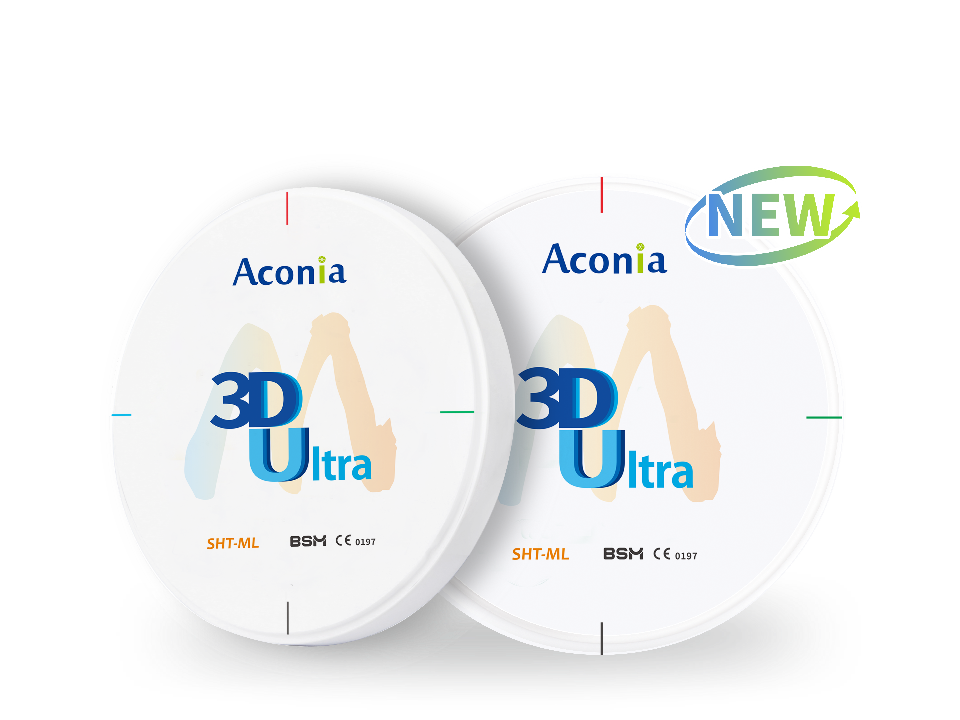
Multilayer Zirconia: This advanced material features a meticulously engineered gradient in both translucency and chroma throughout its structure, designed to emulate the optical stratification of natural teeth. The superficial layers exhibit higher translucency, mimicking enamel, while the deeper layers provide greater opacity and chroma, analogous to dentin. This intrinsic property makes multilayer zirconia exceptionally suitable for anterior restorations and cases where esthetic primacy is paramount.
The distinction between these materials directly informs the selection strategy: monolithic zirconia often necessitates post-milling esthetic enhancement, whereas multilayer zirconia offers a pre-fabricated optical gradient that must be strategically oriented during the milling process.

Ensuring Functional Integrity: The Role of Thickness and Strength
The minimum material thickness is a primary determinant of a restoration's functional durability and resistance to catastrophic failure.
For posterior restorations, where occlusal forces are greatest, monolithic zirconia is recommended with a minimum thickness of 0.8 mm to 1.0 mm. In cases involving parafunctional habits such as bruxism, or for long-span frameworks, even greater thickness may be warranted to ensure a sufficient safety margin against flexural fatigue.
For anterior restorations, the superior esthetics of multilayer zirconia can often be achieved with reduced bulk, with acceptable thicknesses ranging from 0.6 mm to 0.8 mm for veneers and crowns. However, this reduction must always be balanced against the requisite structural integrity, particularly for cantilevered designs or canine guidance.
Monolithic zirconia typically demonstrates flexural strength values exceeding 1,000 MPa, providing exceptional longevity under load. Multilayer zirconia, while offering slightly lower strength values in the range of 600–900 MPa, provides more than adequate durability for the typically lower forces in the anterior region when appropriate thickness is maintained.
The fundamental principle remains: increased thickness directly correlates with enhanced strength and fatigue resistance, a consideration that must be weighted more heavily in the stress-bearing posterior dentition.
Achieving Esthetic Excellence: Shade, Translucency, and Characterization
Shade selection and management are equally critical to the visual success of a zirconia restoration and are intimately related to material choice and thickness.
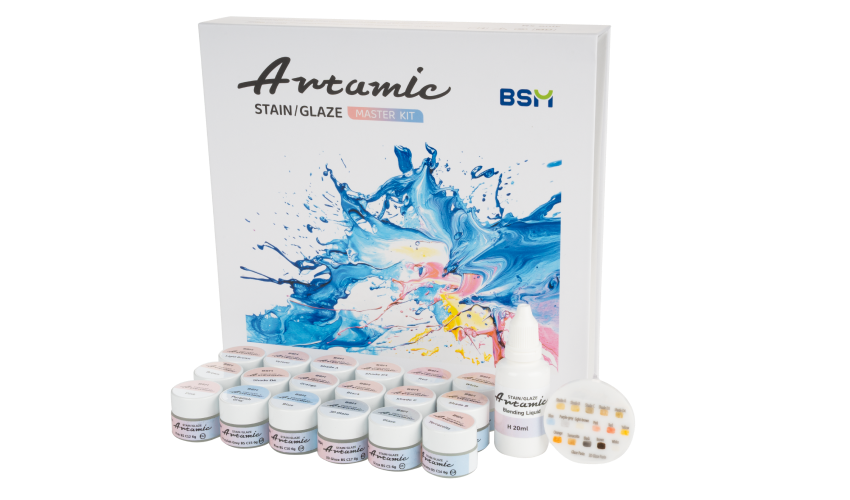
Monolithic Zirconia: Its homogeneous, opaque nature requires skillful application of external staining and glazing to achieve vitality and depth. High-quality characterization systems, such as those offered by Besmile, allow technicians to artistically layer color and create effects that mimic hypocalcifications, incisal halos, and cervical saturation, transforming a strong framework into a lifelike tooth.
Multilayer Zirconia: This material provides a significant esthetic head start through its built-in chromatic and translucency gradient. The key to harnessing this potential lies in precise disc orientation during nesting within the CAD software, ensuring the restoration's incisal third aligns with the translucent zone and the cervical third with the more chromatically saturated base. While requiring less intrinsic characterization, final staining and glazing are still employed to perfect surface texture, localized color nuances, and overall glaze layer aesthetics.
A critical interaction must be noted: as restoration thickness decreases, inherent translucency increases, which can perceptibly alter the final shade value. Therefore, shade selection must be made in conjunction with the planned final thickness to ensure accurate color matching, particularly in the esthetic zone.
Clinical and Technical Synergy: A Collaborative Decision Framework
Successful outcomes hinge on the integrated considerations of both the clinical and laboratory teams.
From the Clinical Perspective, the dentist evaluates:
Available Occlusal Space: Limited vertical clearance may necessitate the use of a thinner, yet exceptionally strong, monolithic zirconia restoration.
Patient Esthetic Demands: High smile-line patients may prioritize the graded esthetics of multilayer zirconia, accepting its slightly different mechanical profile for the anterior sextant.
Prosthetic Design: Implant-supported crowns in the posterior region benefit from the shock-absorbing resilience and strength of monolithic zirconia, while anterior implant crowns are ideal candidates for the lifelike optics of multilayer zirconia.
From the Laboratory Perspective, the technician manages:
Milling Efficiency: Monolithic zirconia offers straightforward milling, uniform sintering behavior, and eliminates the risk of layer separation.
Precision Nesting: Multilayer zirconia demands careful digital orientation during the nesting phase to correctly align its internal gradient with the tooth's anatomical long axis, a step crucial for a natural outcome.
Characterization Workflow: The laboratory must select and master the appropriate staining and glazing protocol for the chosen zirconia type to finalize the esthetic result.
Besmile facilitates this collaboration by supplying not only premium CAD/CAM discs in both formats but also the integrated staining, glazing, and technical support that ensures consistency from digital design to clinical delivery.
Protocol for Selection: A Summary of Best Practices
For Posterior Teeth: Default to monolithic zirconia with a minimum thickness of 1.0 mm. Increase thickness for bruxers, long spans, or suboptimal occlusal schemes.
For Anterior Teeth: Prioritize multilayer zirconia with a thickness of 0.6–0.8 mm to leverage its natural gradient. Ensure precise nesting to align the material's properties with tooth anatomy.
For Shade Matching: Always conduct shade selection with the intended final thickness in mind, using digital shade guides or spectrophotometers for objectivity. Anticipate how thickness will influence translucency and value.
For Characterization: Employ high-fidelity staining systems like those from Besmile to add the final layer of individuality and depth, regardless of the zirconia substrate.
For Hybrid Cases: In full-mouth rehabilitations or complex cases, strategically employ monolithic zirconia in the posterior for durability and multilayer zirconia in the anterior for esthetics, ensuring a harmonious transition.
The Besmile Partnership: Enabling Predictable Excellence
As a dedicated partner in dental esthetic and restorative solutions, Besmile provides the essential ecosystem for success:
A curated portfolio of high-performance monolithic and multilayer zirconia discs with verified consistency.
Complete implant prosthetic components and advanced coloring liquid systems for seamless integration and characterization.
Expert technical guidance on material selection, milling parameters, and sintering protocols tailored to specific clinical indications.
A commitment to continuous innovation, ensuring access to materials that meet the evolving demands for both supreme strength and breathtaking esthetics in contemporary dentistry.
By incorporating Besmile's validated materials and protocols into your workflow, you secure the foundation for delivering predictable, durable, and visually impeccable dental restorations that fulfill the highest standards of patient care.
Conclusion
The strategic selection of thickness and shade for CAD/CAM zirconia discs is a critical determinant of clinical success, requiring a deliberate balance between biomechanical requirements and esthetic ideals.
Monolithic zirconia stands as the unequivocal choice for posterior and high-stress applications, where its exceptional strength ensures longevity under demanding functional loads.
Multilayer zirconia offers a transformative solution for anterior and esthetically driven cases, where its inherent optical gradient provides a level of natural realism that is difficult to achieve with layered techniques.
Informed decision-making, rooted in a thorough understanding of material science, patient-specific factors, and collaborative workflow, empowers dental professionals to optimize every restoration. Supported by the comprehensive zirconia solutions, characterization systems, and expertise from Besmile, achieving restorations that are simultaneously enduring, beautiful, and predictable is not merely an aspiration—it is a reproducible standard of care.