





dadasd
14
2025.08
Optimal Zirconia Sintering Protocols: A Comprehensive Guide for Laboratory and Clinical Excellence
Zirconia sintering represents the definitive transformative stage in the fabrication of high-performance CAD/CAM restorations. Following milling, the porous "green-state" zirconia framework possesses minimal structural integrity and esthetic potential. It is the precisely controlled thermal cycle within a dedicated sintering furnace that imparts the material's renowned mechanical strength, optical properties, and clinical longevity.
For dental laboratories and clinics committed to predictable, high-quality outcomes, a mastery of sintering science is non-negotiable. This guide elucidates the principles of effective sintering, outlines the critical balance of thermal parameters, and provides actionable strategies to prevent common defects, thereby ensuring restorations that are both exceptionally durable and esthetically seamless.
The Foundational Role of Sintering in Zirconia Restorations
Zirconia is unique among dental ceramics; its superior properties are not inherent but are achieved through the sintering process. This high-temperature treatment facilitates atomic diffusion, eliminating porosity and transforming the microstructure into a dense, polycrystalline network.
The clinical benefits of optimal sintering are unequivocal:
· Ultimate Flexural Strength: Full densification yields flexural strength exceeding 1000 MPa, enabling zirconia to withstand the high occlusal forces of posterior regions and the functional demands of long-span frameworks.
· Controlled Translucency: A uniform, fine-grained microstructure, achieved through precise thermal management, allows for light transmission that closely mimics natural dental enamel.
· Predictable Color Stability: Consistent and even heating is paramount for accurate shade reproduction, especially when utilizing pre-shaded or meticulously stained multilayer zirconia discs.
· Enhanced Longevity: A fully sintered, dense ceramic surface resists abrasive wear, prevents subsurface degradation, and ensures the restoration's integrity over time.
In essence, improper sintering can irrevocably compromise even the most accurately milled CAD/CAM design, leading to clinical failure.
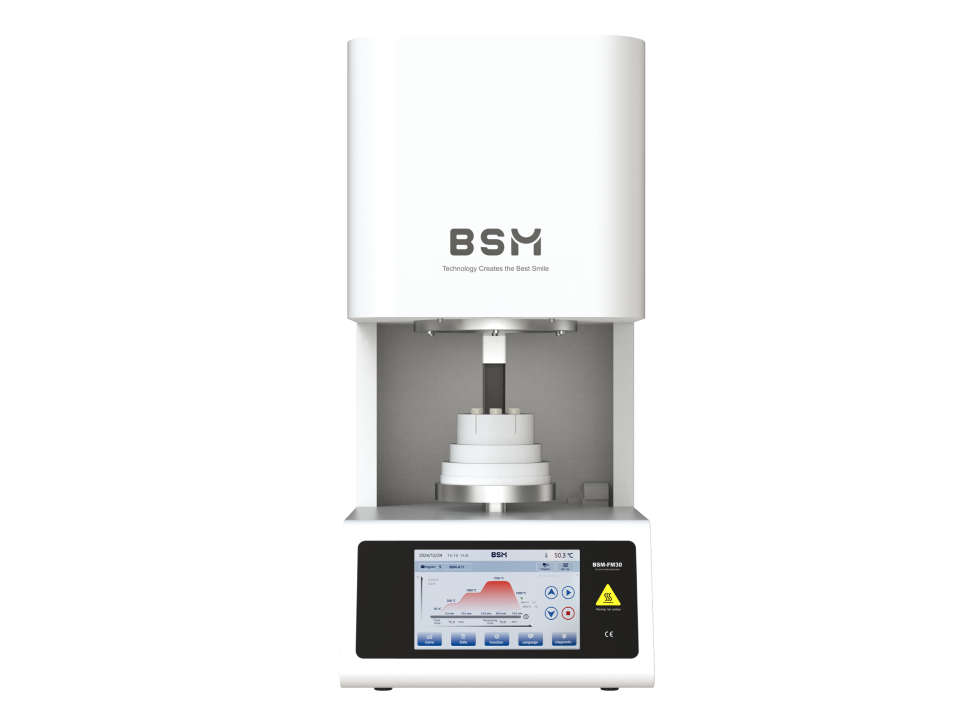
Mastering the Thermal Triad: Temperature, Time, and Cooling
The sintering outcome is dictated by the furnace program, a precise orchestration of three interdependent variables:
1. Sintering Temperature
· The peak temperature for most dental zirconia formulations ranges between 1450°C and 1550°C.
· Insufficient Temperature: Leads to incomplete densification, resulting in a weakened, porous structure susceptible to fracture and exhibiting poor surface polish.
· Excessive Temperature: Promotes exaggerated grain growth, which can diminish translucency, introduce structural flaws, and potentially alter the crystalline phase stability.
2. Holding Time (Dwell Time)
· Effective densification typically requires a sustained hold at peak temperature for 2 to 4 hours, contingent upon the specific zirconia brand and restoration volume.
· Inadequate Dwell Time: Risks residual porosity and suboptimal strength development.
· Prolonged Dwell Time: Offers diminishing returns, consumes excess energy, and may induce undesirable color shifts in tinted materials.
3. Controlled Cooling Rate
· The cooling phase is as critical as heating. A rapid quench induces thermal stress, manifesting as cracks or distortion.
· A gradual, programmed cooling cycle is essential to relieve internal stresses, preserve dimensional accuracy, and ensure uniform final coloration.
The precise calibration and balance of this thermal triad are the cornerstone of consistent, high-quality zirconia sintering.
The Direct Correlation Between Sintering and Restorative Properties
Every key attribute of a final zirconia restoration is a direct function of the sintering cycle:
· Color Fidelity: Pre-colored discs and externally applied staining liquids require a specific thermal profile to activate and stabilize chromophores without causing fading, blotchiness, or unexpected shade deviation.
· Strength Realization: Zirconia achieves its published mechanical specifications only upon complete densification. An undersintered restoration possesses a critically compromised fracture resistance.
· Optical Performance: Translucency is governed by grain size and pore elimination. Optimal sintering produces a uniform, fine grain structure that balances strength with the light-scattering properties necessary for natural esthetics.
· Surface Integrity: A properly sintered surface is densely vitrified, requiring minimal post-sintering adjustment and polishing. This results in superior wear characteristics against opposing dentition.
Therefore, the sintering protocol is not merely a thermal step but the definitive process that unlocks the functional and esthetic promise of CAD/CAM zirconia.
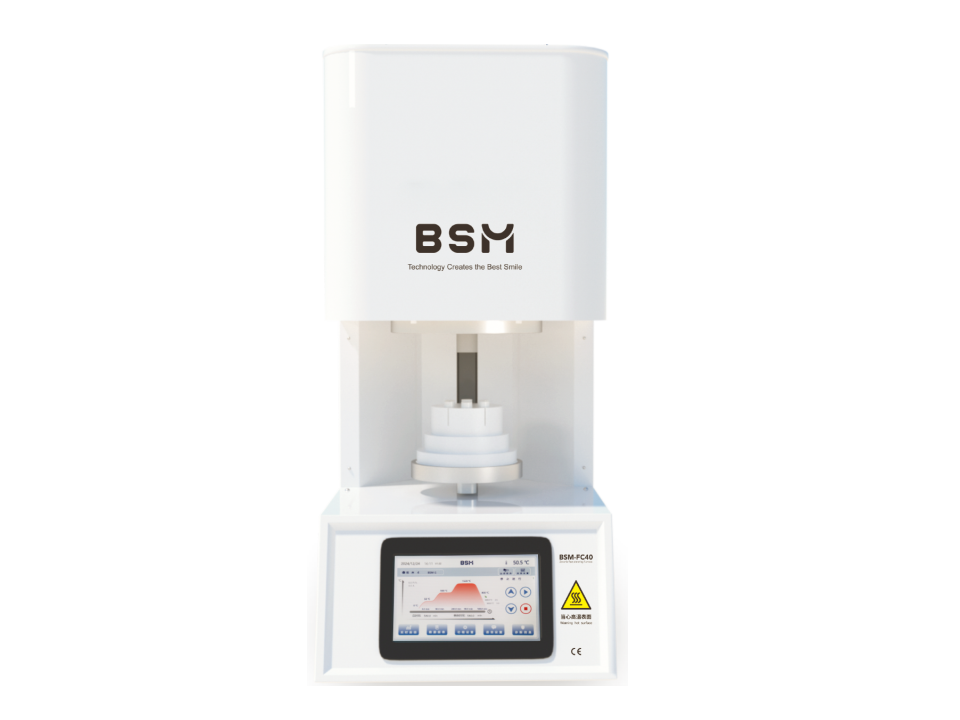
Mitigating Common Sintering Defects: Cracks, Warpage, and Discoloration
Awareness of potential failures enables their prevention through procedural rigor:
· Cracking: Primarily caused by excessive heating or cooling rates (thermal shock). Solution: Employ gradual, manufacturer-recommended ramp speeds.
· Warpage/Distortion: Often occurs in thin-walled restorations due to uneven thermal exposure or inadequate support during sintering. Solution: Utilize high-purity sintering beads or supports to ensure stable, uniform positioning on the furnace tray.
· Discoloration: Can stem from furnace chamber contamination, impure sintering accessories, or incompatible coloring agents. Solution: Implement a strict furnace maintenance and cleaning schedule and use only certified, high-purity consumables.
· Surface Granularity/Roughness: Typically indicates insufficient peak temperature or dwell time, leaving the surface incompletely densified. Solution: Verify and calibrate furnace temperature and adhere to material-specific cycle durations.
Proactive control of these variables transforms sintering from a potential source of error into a guarantor of quality.
Essential Laboratory Protocols for Sintering Excellence
To ensure reproducible, high-grade results, laboratories should institutionalize the following practices:
· Routine Furnace Calibration: Even minor temperature inaccuracies can alter shade and strength. Schedule regular validations against a certified standard.
· Investment in High-Purity Accessories: Use only dedicated, contamination-free sintering trays, setters, and beads to prevent impurity transfer and surface defects.
· Adherence to Material-Specific Protocols: Respect the unique sintering parameters provided by each zirconia manufacturer; a universal program does not exist.
· Strategic Furnace Loading: Avoid overcrowding trays. Ensure ample space between restorations for uniform atmospheric and thermal circulation.
· Meticulous Process Documentation: Maintain detailed logs of sintering parameters (cycle name, peak temperature, dwell time, cooling rate) for each case and material type to ensure traceability and consistency.
Standardization of these protocols is the hallmark of a quality-driven dental laboratory.
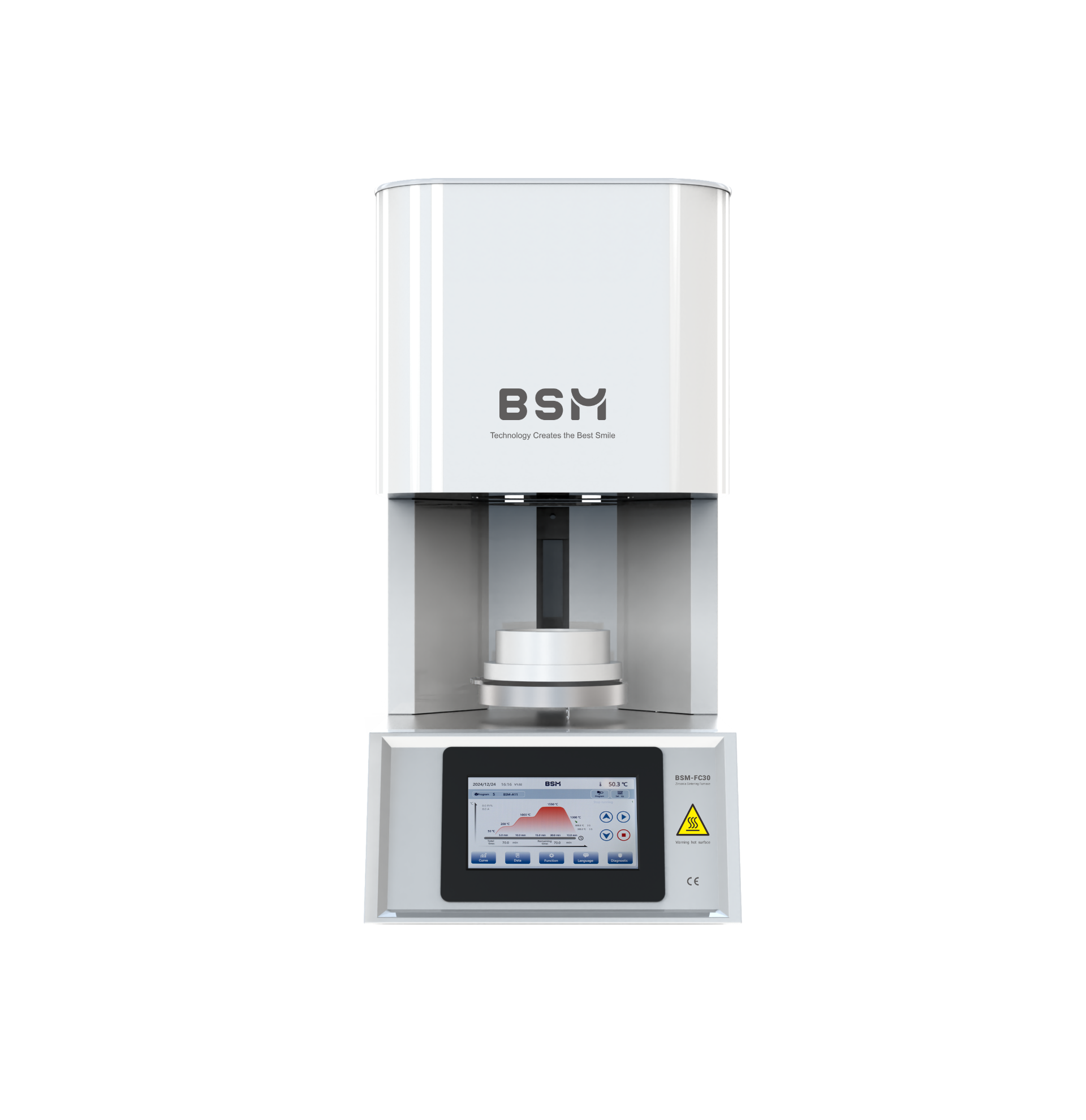
The Besmile Advantage in Zirconia Sintering
As a premier innovator in CAD/CAM dental solutions, Besmile provides an integrated ecosystem designed to optimize every phase of zirconia restoration, including the critical sintering stage. From advanced multilayer zirconia discs with predictable sintering behavior and precision coloring systems to reliable sintering furnace technology, Besmile equips professionals with the tools for success.
Integrating Besmile's solutions into your workflow enables:
· Unmatched Shade Consistency: Achieve reliable, batch-to-batch color fidelity across all restorations.
· Optimized Sintering Profiles: Leverage material-specific protocols developed for both high-strength monolithic and esthetic multilayer zirconia.
· Confident Reproducibility: Utilize precision-engineered equipment to deliver predictable, high-quality results for every case.
With Besmile, dental laboratories and clinics secure a trusted partnership dedicated to achieving sintering excellence, forming the foundation for restorations that excel in durability, esthetics, and patient satisfaction.
Conclusion
Zirconia sintering is the conclusive, non-negotiable determinant of clinical success in CAD/CAM dentistry. It is the process through which a milled blank is transmuted into a biomimetic restoration capable of enduring functional demands while meeting the highest esthetic standards. Mastery of furnace protocols—the meticulous balance of temperature, time, and cooling—is therefore essential for ensuring both uncompromising strength and precise color stability.
For laboratories and clinics pursuing operational excellence, the synergy of expert knowledge, standardized protocols, and superior materials is paramount. Besmile stands as a committed partner in this pursuit, offering a complete portfolio of CAD/CAM solutions engineered to help you consistently achieve optimal zirconia sintering results and deliver restorations of enduring quality.